
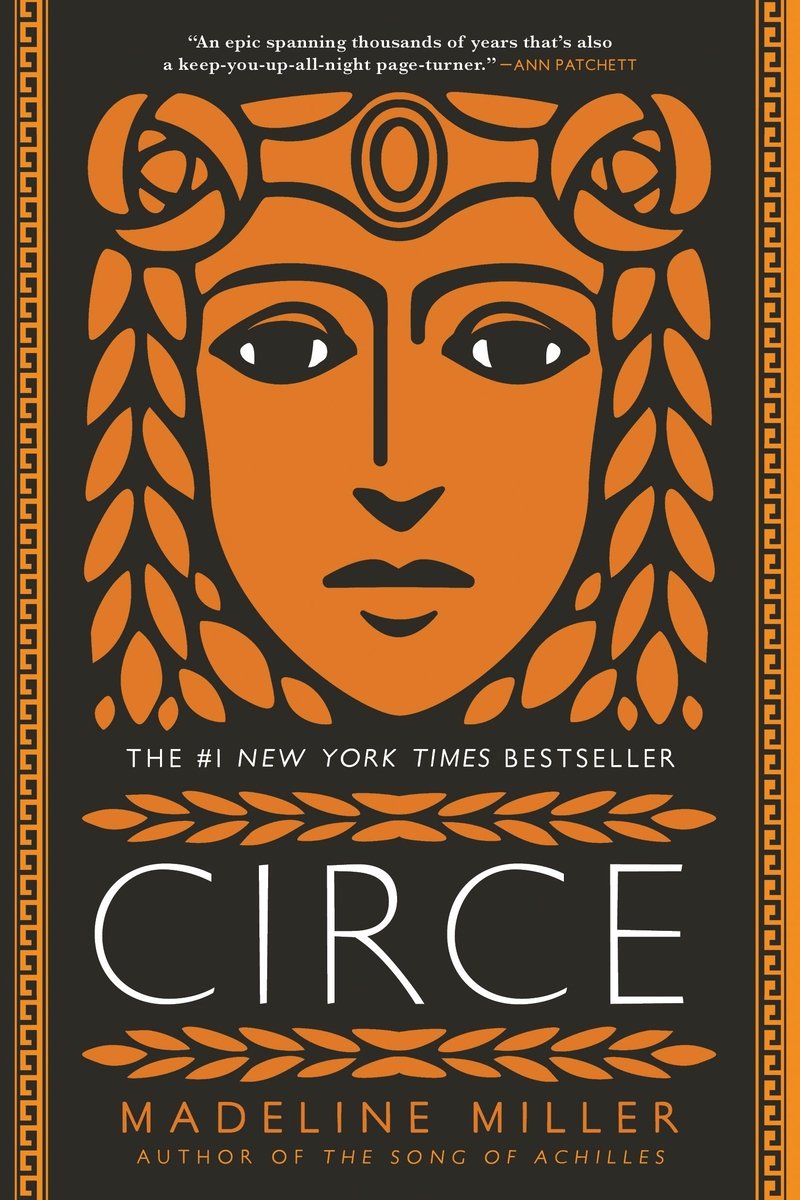
Borrowed from the library with Libby and have had such a hard time putting it down this week! It’s making me want to reread Song of Achilles.
highlights
…our powers were so modest they could scarcely ensure our eternities… Chapter 1
At my birth, an aunt — I will spare you her name because my tale is full of aunts — washed and wrapped me… Chapter 1
I just love “my tale is full of aunts.”
You cannot know how frightened gods are of pain. There is nothing more foreign to them, and so nothing they ache more deeply to see. Chapter 2
pharmaka — It was the word Aeetes had used, when he spoke of herbs with wonderous powers, sprung from the fallen blood of gods. Chapter 4
This immediately made me wonder if this is where the word pharmacy comes from, and it is! Cool.
This is the grief that makes our kind choose to be stones and trees rather than flesh. Chapter 5
All those years I had spent with them were like a stone tossed in a pool. Already, the ripples were gone. Chapter 7
No wonder I have been so slow, I thought. All this while, I have been a weave without wool, a ship without the sea. Yet now look where I sail. Chapter 7
I learned to braid my hair back, so it would not catch on every twig, and how to tie my skirts at the knee to keep the burrs off. I learned to recognize the different blooming vines and gaudy roses, to spot the shining dragonflies and coiling snakes. Chapter 7
Let me say what sorcery is not: it is not divine power, which comes with a thought and a blink. It must be made and worked, planned and searched out, dug up, dried, chopped and ground, cooked, spoken over, and sung. Even after all that, it can fail, as gods do not. If my herbs are not fresh enough, if my attention falters, if my will is weak, the draughts go stale and rancid in my hands. Chapter 7
However often I had used an herb before, each cutting had its own character. One rose would give up its secrets if it were ground, another must be pressed, a third steeped. Each spell was a mountain to be climbed anew. All I could carry with me from last time was the knowledge that it could be done. Chapter 7
I just love all these passages about her learning to live on her own, describing the work that went into her sorcery. The words feel good and comfy to read.
I had no right to claim him, I knew it. But in a solitary life, there are rare moments when another soul dips near yours, as stars once a year brush the earth. Such a constellation was he to me. Chapter 11
Brave, dull-brained Ajax, built like a mountainside. Chapter 16
Ajax mention!
He would see down to my bones. He would gather my weaknesses up and set them with the rest of his collection, alongside Achilles’ and Ajax’s. He kept them on his person as other men keep their knives. Chapter 16
“I fear I have robbed them not only of their youth but their age as well.” Chapter 16
“Give him to me, I said. I held him up before me and looked into his screaming face. ‘Sweet son,’ I said, ‘you are right, this world is a wild and terrible place, and worth shouting at. But you are safe now, and all of us need to sleep. Will you let us have a little peace?’ And he calmed.” Chapter 16
The chapters with Odysseus were fun — I love the way she writes him.
“I saw Achilles and Patroclus and Ajax bearing the wound he gave himself. They envied me my life, but at least their battles are done.” Chapter 17
Odysseus visiting the underworld is one of my favorite (and the saddest, I think) parts in the Odyssey.
Why should he be peaceful? I never was, nor his father either, when I knew him. The difference was that he was not afraid to be burnt. Chapter 19
My mind leapt with images of destruction: the earth sent spiraling into darkness, islands drowned in the sea, my enemies transformed and crawling at my feet. But now when I sought those fantasties, my son’s face would not let them take root. If I burned down the world, he would burn with it. Chapter 21
No wonder his father had been so baffled by him. He would have been always looking for the hidden meaning, the knife in the dark. But Telemachus carried his blade in the open. Chapter 23
They were kind, but they were nothing to me. The syrups in my pantry had been my companions longer. Chapter 24
He would patch their ships, and I would cast charms against biting flies and fevers, and we would take pleasure in the simple mending of the world. Chapter 27
He does not mean that it does not hurt. He does not mean that we are not frightened. Only that: we are here. This is what it means to swim in the tide, to walk the earth and feel it touch your feet. This is what it means to be alive. Chapter 27